How GPT Image 2 Is Enabling Smaller Brands to Compete Visually With Established Players

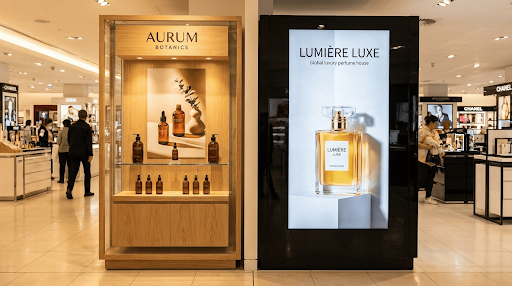
For decades, the distance between a boutique startup and a Fortune 500 company was defined by a single factor: the production budget. Large corporations could afford high-end commercial photography, professional lighting crews, and elite graphic design agencies. Small businesses were often left choosing between generic stock imagery or amateur in-house attempts that lacked a professional polish.
The emergence of early generative artificial intelligence promised to level this playing field. However, those initial tools often fell short of commercial requirements. They struggled with distorted anatomical features and “uncanny valley” faces. Most importantly, they suffered from the notorious “garbled text” problem, making them useless for packaging or professional advertisements.
The landscape has shifted fundamentally with the introduction of high-precision models. The release of GPT Image 2 signifies a transition from AI as a creative novelty to AI as a foundational commercial tool. This evolution allows smaller entities to produce studio-grade assets without the overhead of a traditional production house.
The Traditional Barrier to Professional Visuals
Established brands maintain their market dominance through visual consistency and high-fidelity output. This requires a massive investment in asset creation. A single professional product shoot can cost thousands of dollars when factoring in photographers, prop stylists, and post-production editors.
Small brands typically lack these resources. They face a specific set of challenges that prevent them from appearing “premium” in a crowded marketplace:
- The inability to maintain character consistency across multiple campaign variants.
- The high cost of localized marketing materials for international markets.
- The reliance on stock photos that look “staged” and lack brand personality.
- The technical difficulty of integrating accurate typography into complex visual designs.
When a small brand tries to use standard generative tools, they often hit a wall. These tools might create a beautiful background but fail to render a legible product label. This forces designers to spend hours in post-processing, which negates the efficiency gains of using AI in the first place.
How GPT Image 2 Redefines Commercial Imagery
The introduction of GPT Image 2 addresses these technical limitations directly. It moves away from the whimsical aesthetics of early AI and toward what industry professionals call “Studio-Grade Output.” This refers to imagery that is sharp, anatomically correct, and ready for high-resolution printing.
One of the most significant breakthroughs is the mastery of typography. While previous models generated gibberish, this new standard offers 95% text accuracy. This allows a small brand to generate a complete poster or packaging design where the brand name and product details are rendered perfectly in the first pass.
The ability to rapidly iterate on high-quality visual content is becoming a primary competitive advantage. Small brands can now test dozens of visual concepts in the time it used to take to brief an agency.
Strategies for Small Brands to Scale Visually
To compete with industry giants, smaller brands must move beyond “one-off” image generation. They need to build a structured workflow that mimics a professional studio. By leveraging GPT Image 2, marketing departments can implement strategies that were once reserved for top-tier agencies.
1. Build Around Brand Character Consistency
A major pain point in digital marketing is keeping a consistent “face” for the brand. If your brand uses a specific mascot or model, that character needs to look identical in every social media post, banner ad, and email header.
- Use specialized models to define a core asset.
- Apply consistent prompts to place that asset in different environments.
- Ensure that lighting and textures remain uniform across the entire campaign.
- Avoid “creative drift” by using precision controls rather than random generation.
2. Prioritize Native 4K Resolution
Blurry or pixelated images are the fastest way to lose consumer trust. Established players always use high-resolution assets. Smaller brands should now utilize 4K native output for all their digital and print materials.
High resolution is not just about size; it is about the “crispness” of the product details. When a customer zooms in on a product shot, they should see realistic textures like fabric weaves or glass reflections. Using GPT Image 2 ensures that these details are preserved, providing a professional feel that rivals traditional photography.
3. Implement Multilingual Typography
For a small brand looking to expand globally, language barriers are often a financial hurdle. Hiring translators and designers for ten different languages is expensive. Modern professional AI tools now support complex scripts, including Chinese, Japanese, and Korean characters.
- Generate localized packaging for international shipping.
- Create region-specific social media ads with perfect local text.
- Maintain the same visual aesthetic while swapping out linguistic elements.
- Reduce the turnaround time for global product launches from months to days.
Higgsfield: The Professional Standard for Production-Ready Assets
As these technologies become more integrated into the business world, platforms like higgsfield have emerged to unify these capabilities. Rather than jumping between multiple disparate tools, professionals need a single environment that can handle the entire creative lifecycle.
The higgsfield platform is designed specifically for the “Marketing Studio” and “Cinema Studio.” It does not just offer one model; it provides access to a suite of professional-grade tools. This includes the Higgsfield Soul model for high-end aesthetics and Seedream for more creative, imaginative projects.
By focusing on “typography that ships,” higgsfield solves the problem of post-production. A designer can generate a final asset that requires zero retouching. This efficiency is what allows a three-person team to produce the same volume of high-quality content as a thirty-person agency.
A Seamless Path to Video Conversion
Visual competition is no longer limited to static images. Social media algorithms heavily favor video content. A small brand that can only produce still photos will eventually be outcompeted by brands that use motion.
The higgsfield workflow is unique because it provides a seamless bridge from high-quality image generation to video. Once a brand has used GPT Image 2 to create a perfect product shot, they can animate that asset within the same platform. This creates a cohesive brand experience across all platforms, from Instagram Reels to website landing pages.
Leveraging Specific Models for Niche Needs
Not every marketing task requires the same visual style. A professional studio approach involves choosing the right tool for the specific job. Within a professional environment, designers can choose from various specialized models:
- Nano Banana Pro: Ideal for fast, iterative concepts where speed is the priority.
- Flux.1: Perfect for high-detail backgrounds and complex environmental lighting.
- Higgsfield Soul: The go-to model for “Pro-Grade” aesthetics and realistic human features.
- Seedream: Best for highly creative and stylized artistic directions.
Small brands can use these tools to create a diverse range of assets. One day they might need a photorealistic product shot; the next, they might need a stylized illustration for a blog post. Having all these options in one place through higgsfield ensures that the brand’s visual identity remains sophisticated and modern.
The Future of Commercial Design
The gap between “small” and “established” is closing. We are entering an era where the quality of a brand’s visuals is limited only by its creative vision, not its bank account. The precision offered by GPT Image 2 means that the “AI look” is a thing of the past.
We are moving toward a world of “Commercial-Grade” AI. In this world, the text is legible, the anatomy is perfect, and the resolution is high enough for a billboard. For the small business owner, this is a revolutionary shift. It means they can finally present their products with the same level of dignity and professionalism as the global leaders in their industry.
By adopting a professional workflow and utilizing tools like GPT Image 2, smaller players can reclaim their time. They can focus on strategy and storytelling rather than struggling with technical design limitations. The democratizing power of high-fidelity AI is not just a trend; it is the new standard for the modern marketing landscape.
As higgsfield continues to refine these tools for its community of over 22 million users, the barrier to entry will only continue to drop. Professionalism is no longer an expensive luxury. It is a tool available to anyone with the vision to use it.