How Do Manufacturers Manage Product Portfolio Planning When Operations Get Complex?

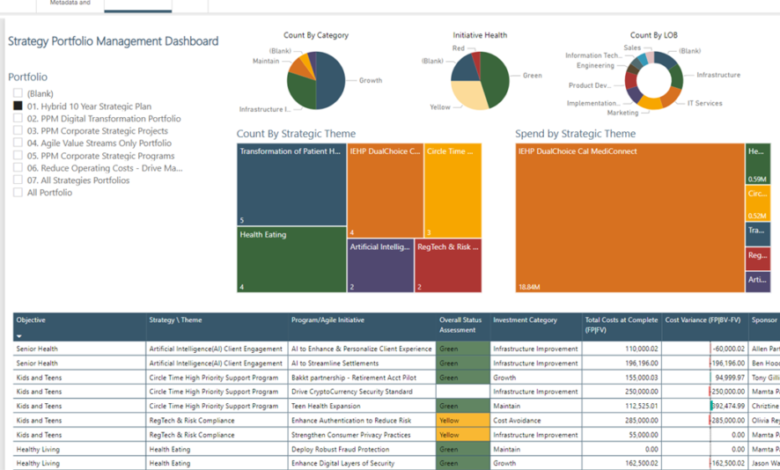
The typical manager believes that in order to manage even larger companies, more products have to be developed, more employees have to be hired, and more software installed. But portfolio planning does not work this way. Its complexity is not just a matter of dealing with more objects, i.e. products, than a manager with a simple manufacturing operation has to cope with. Rather, the interdependencies of the objects that a manager of a simple operation already has to deal with change.
In companies with dozens of product lines and market segments, with products in all phases of their product life, with very different customer bases in different countries and even in regions, very often companies reach the limits of their traditional planning methods with an increasing number of products.
The Hidden Costs of Complexity
The problems that a manufacturer encounters as its number of product lines in a number of markets around the world will not be visible on the company’s financial statements on a quarterly basis. These problems are not simply a matter of a company’s growing. Rather, they are a function of the process of developing a portfolio of products and, as the number of products within a portfolio is increased, the complexity of that process increases. These problems include:
These kinds of problems often become complicated as they are. A semiconductor manufacturer found that three different teams within the company were developing to make build similar wireless modules for different markets. Each team believed that they were developing a product to meet specific needs in the market. But the teams were spread across different divisions in the company and used different terminology to describe similar requirements for the modules. It took eighteen months and a significant amount of financial losses to unwind the duplicated effort of the three teams after the similar wireless modules were discovered.
However, things got worse for this semiconductor manufacturer. Each of the three teams had engaged with suppliers and contracted for the necessary tooling and test equipment. In addition, each team had also developed test plans in order to verify the functionality of their semiconductor module. It was only when the teams came together to review each other’s work that they realized the extent of the problem that they faced. It would take 18 months to unravel the complex web of work that had been created and would involve considerable financial loss.
Pharmaceutical products have long product lifecycles, of up to 20 years, and come in many different forms. Each product can have many different variants, all with their own individual manufacturing requirements and commercial promises to customers. Often the commercial teams responsible for selling a product do not have a complete understanding of the production constraints and as such can make commercial promises to customers that cannot be delivered. These promises are then have to be changed to expensive rush orders to try and recover lost margin later.
Traditional Planning Methods Break Down
At first manufacturers try to plan their products using simple spreadsheets. However, as soon as the number of products reaches a dozen or so, these tools are no longer sufficient. Then manufacturers graduate to using enterprise resource planning systems, which are able to efficiently manage the manufacturing and logistics of a company. However, these systems are designed to record what has already happened and are of limited use when it comes to forward-looking cross-functional planning.
In the majority of cases, the typical tools used for portfolio planning are not equipped to handle a complex product portfolio as a whole. In fact, typical tools, i.e. typically spreadsheets or enterprise systems, are used to analyze individual products independently of each other. For example, a Product A analyst would typically use a tool to analyze how a Product A is performing versus how a Product B is performing. These tools are not able to model how changes to a Product A could affect the other products in the portfolio. Also, these typical tools are not able to model how resource constraints in one area of the organization could cause problems elsewhere in the organization.
There are further challenges that complex product portfolios pose for companies when trying to make fast strategic decisions. For example, a consumer electronics manufacturer with many products could be faced with a shortage of chips. The company would then need to decide which products to prioritize in terms of their current profitability, strategic value, customer relationships and future market opportunities.
The inability to quickly and accurately perform a multidimensional analysis of information is a weakness of spreadsheets when it comes to strategic decisions regarding a complex portfolio of products.
But there is a problem. In the majority of organizations, planning is done on a reactive basis, i.e. the team is driving with their eyes closed and do not know what is coming around the next corner. Decisions are made with regards to launching products without consideration of the total demand placed on the resources of the organization. Highly profitable products are removed from the market because their strategic value has not been communicated to the other functions in the organization.
Purpose-built Platforms for Complex Portfolios
However, there are also a number of manufacturers that have started to use specialized portfolio planning tools. These tools are used by cross-functional product planning teams for strategic portfolio planning and to simulate the effects of different scenarios for planning. The key difference between these tools and the spreadsheets that are typically used for planning is that they model the relationships between products, as well as the individual metrics for each product.
There are specialized solutions available for product portfolio planning in complex manufacturing. These systems support the product portfolio planning and model the relationships between products and the product and its manufacturing requirements. The effects of any changes to a product can then be modeled for the entire product portfolio. The required changes to the manufacturing can then be derived from these models. The systems can also be used to analyze the impact of the market requirements on the use of resources for the different products.
Building Cross-functional Visibility
Cross-functional planning is a cross-functional discipline within a company and therefore best practiced outside of finance and product management. Everyone involved in a product (engineering, sales, marketing, etc.) must be aware of the commercial priorities as well as the manufacturing constraints for that product. Thus cross-functional reviews on a regular basis are required. However these reviews can only be held and decisions made with support from systems that can model different scenarios in a matter of seconds.
The way that your planning and portfolio management tool supports cross-functional views of information, will enable the cross-functional reviews that are becoming more of a discipline within your company. The ability to quickly and easily model out different scenarios and their likely effects on your manufacturing portfolio, is also very important.
Integration Without Disruption
Even so, there are many challenges connected to integration of Portfolio Management with the existing Enterprise Systems of a manufacturer. Since a manufacturer has often already made large investments in a variety of tools to support its processes, a number of these cannot be swapped for new ones over night. This is why it is very important to be able to select tools which can be set up to work within the Enterprise Systems that already exist. In practice, this often only works for larger problems, if first a smaller problem is solved. A typical example of this would be the use of Portfolio Management tools for Annual Planning, and then gradually extending that to include use of those same tools for Review meetings held on a Quarterly basis. After that, it is then relatively straightforward to use the tools for on-going Optimization as well.
Also changing systems is not always easy and fast. Thus, in the first place, one should test new software solutions in areas of the company and later, when satisfactory, roll them out to other parts of the company. For example, annual planning annual products can very well be done with portfolio tools for product portfolios. Subsequent quarterly reviews can also be modelled by means of the same software. This way, a manufacturer can benefit from a wide variety of optimization possibilities for his ongoing decisions.
Those companies that successfully manage to integrate the portfolio tooling into their processes have a major competitive advantage. They can react to new market requirements in a much faster way than their competitors. Furthermore, they are able to make much better use of their resources. This, however, requires a certain level of understanding of the limitations of planning with traditional methods and of the specific problems that can occur in complex manufacturing environments.