Industrial electrical systems can generate considerable heat during normal operation. If temperatures are allowed to escalate, this can lead to compromised equipment performance and shortened component lifespans.
Proven thermal management solutions from RS encompass the likes of filter fans, heat sinks, and thermal interface materials (TIMs).
However, if products like these are to deliver their maximum potential when it comes to maintaining equipment reliability, preserving operational efficiency, and protecting valuable electrical assets, the right broader cooling strategies must be pursued, too.
Why Does Thermal Management Matter So Much in Industrial Settings?
Heat may not be the only potential culprit for electrical components degrading over time, but it is certainly among the primary contributors in many instances.
As temperatures rise, electronic devices can be subject to accelerated wear, reduced efficiency, and increased failure rates. These effects can have particularly perilous consequences in industrial environments, where equipment often operates continuously and under demanding conditions.
Across such settings, then, effective thermal management is frequently a critical requirement. It helps maintain components within manufacturer-recommended operating ranges (often up to 40°C to 50°C internal), in addition to reducing energy consumption and supporting compliance with national and international standards.
5 Common Cooling Strategies for Industrial Electrical Systems
Decision-makers for industrial premises often seek to put in place both active and passive methods for cooling the equipment in operation at their sites:
- Passive Cooling
Passive methods entail the use of natural convection, conduction, and radiation, without the need to depend on additional power.
Aluminium or copper heat sinks, for instance, dissipate heat from high-power components. Meanwhile, such solutions as thermal pads, gap fillers, and compounds help improve heat transfer between components and heat sinks.
The specific design of an enclosure can also help promote airflow. Ventilated panels, large surface areas, and strategic component placement can be low-maintenance and energy-efficient means of achieving this.
- Active Air Cooling with Fans
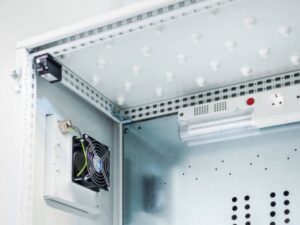
One of the most common and cost-effective thermal management solutions for industrial enclosures is the use of forced convection with fans.
Such interventions as axial fans, centrifugal blowers, and filter fans move air through enclosures to remove hotspots. As for larger ventilation needs, in-line duct fans and extractor fans can be indispensable.
- Enclosure Air Conditioning and Heat Exchangers
For sealed or harsh environments such as Ingress Protection (IP)-rated enclosures exposed to dust, moisture, or chemicals, it can be wise to invest in closed-loop systems that provide effective cooling at the same time as preventing contaminant ingress.
Potential solutions under this banner include cabinet air conditioners that can be counted on to maintain precise temperatures, as well as heat exchangers. The latter, whether air-to-air or air-to-water, can transfer heat without mixing internal and external air. This can make them ideal for outdoor or food/pharma applications.
- Liquid Cooling
As far as high-power applications like drives or inverters are concerned, liquid cold plates or chilled water systems allow for superior heat removal.
They’re relatively complex solutions, but they’re well-matched to the needs of dense installations or settings with high ambient temperatures.
- Hybrid And Smart Solutions
Optimised energy use is possible when modern systems are installed that combine fans with monitoring (thermostats, sensors) and variable speed controls.
At a time when sustainability initiatives remain strong, many organisations in temperate climates (like the UK) are also attracted to sources of free cooling. They may, for example, look to utilise cooler external air when available.
Conclusion: Effective Cooling Is a Necessity, Not A Luxury
A well-devised and effective thermal management approach will play a critical role in the reliability and longevity of a given industrial electrical system.
Whether a high standard of cooling is achieved through passive solutions such as heat sinks and ventilation or active technologies like filter fans and enclosure air conditioning units, it can greatly help maintain safe operating temperatures and minimise the risk of equipment failure.