The Rise of Family-Friendly 3D Printing: Safe, Fun, and Educational Ideas for Every Home
 Admin
Send an email
May 25, 2026
Admin
Send an email
May 25, 2026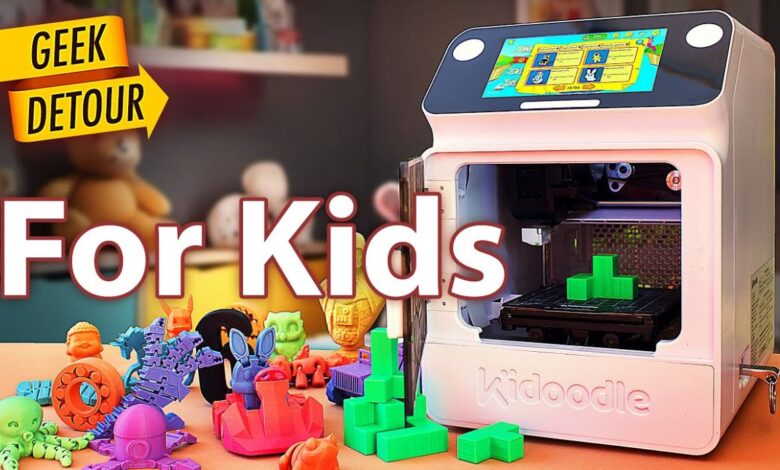
In recent years, Family-Friendly 3D Printing has transformed from a futuristic hobby into a practical and exciting activity for households around the world. Families are no longer viewing 3D printers as complicated machines designed only for engineers or technology experts. Instead, parents and children are using them together to create toys, educational tools, art projects, home decorations, and even problem-solving inventions. The growing popularity of affordable and easy-to-use printers has made this technology more accessible than ever before.
One of the biggest reasons behind the rise of Family-Friendly 3D Printing is its ability to combine entertainment with education. Children can learn science, mathematics, engineering, design, and creativity while having fun. Parents appreciate the opportunity to reduce passive screen time and replace it with interactive learning experiences. Unlike many traditional hobbies, 3D printing encourages hands-on thinking, patience, and imagination.
Today, families use 3D printers for school projects, custom gifts, learning activities, and practical household items. This technology is changing how families spend time together and how children develop problem-solving skills at home. As the demand for creative and educational activities increases, Family-Friendly 3D Printing is quickly becoming one of the most valuable modern household hobbies.
Quick Information Table About Family-Friendly 3D Printing
| Feature | Details |
|---|---|
| Main Purpose | Educational and creative family activity |
| Suitable Age Group | Children above 8 years with supervision |
| Common Materials | PLA filament, PETG filament |
| Safest Filament Type | PLA because it is non-toxic and low odor |
| Average Beginner Printer Cost | $200–$500 |
| Learning Benefits | STEM skills, creativity, problem-solving |
| Popular Projects | Toys, organizers, school models, decorations |
| Printing Time | 30 minutes to several hours |
| Recommended Supervision | Adult supervision for children |
| Main Educational Areas | Science, technology, engineering, art, math |
| Beginner Software | Tinkercad and beginner-friendly slicers |
| Maintenance Level | Moderate cleaning and calibration |
| Eco-Friendly Option | Recyclable PLA materials available |
| Most Common Family Use | Educational projects and personalized items |
| Growing Trend | Home learning and creative entertainment |
What Is Family-Friendly 3D Printing?
Family-Friendly 3D Printing refers to the use of safe, beginner-friendly 3D printers and materials that are suitable for home environments where children and parents can participate together. Unlike industrial 3D printing, which focuses on manufacturing and engineering, family-oriented printing emphasizes safety, simplicity, creativity, and education. These printers are designed with user-friendly interfaces, enclosed printing areas, and low-temperature materials to reduce risks.
Families can create objects layer by layer using digital designs downloaded from online libraries or created using simple software. Children often enjoy watching the printing process because it feels like seeing an idea come to life in real time. This sense of excitement encourages curiosity and innovation.
The family-focused approach to 3D printing also promotes teamwork. Parents can help children design projects while children contribute imaginative ideas. This collaborative environment creates meaningful experiences and allows family members to learn together. Many schools now encourage students to explore 3D printing, making it even more valuable for home learning support.
Why Family-Friendly 3D Printing Is Growing So Fast
The rapid growth of Family-Friendly 3D Printing is closely connected to changes in technology, education, and entertainment habits. Modern families are searching for activities that are both enjoyable and educational. Traditional toys and passive digital entertainment often fail to provide long-term learning opportunities, while 3D printing offers creativity, interaction, and skill development all at once.
Another reason for this growth is affordability. Several years ago, 3D printers were expensive and difficult to use. Today, many beginner-friendly models are affordable and include automatic settings that simplify the printing process. This has opened the door for ordinary households to explore the technology without needing advanced technical knowledge.
Social media and online communities have also contributed to the popularity of family-based 3D printing. Parents regularly share creative ideas, printable models, and educational projects online. These communities help beginners learn quickly and inspire families to try new activities. As a result, 3D printing is no longer viewed as a niche hobby but as a practical learning tool for modern homes.
Educational Benefits for Children3
One of the strongest advantages of Family-Friendly 3D Printing is its educational value. Children gain hands-on experience with STEM subjects, including science, technology, engineering, and mathematics. Instead of reading about concepts in textbooks alone, children can physically create and test their ideas.
For example, a child studying geometry can print shapes and understand dimensions more effectively. Students learning biology can create 3D models of cells or organs to improve understanding. Engineering concepts become easier when children build moving parts, bridges, or simple machines. This practical interaction improves memory retention and critical thinking skills.
3D printing also develops patience and problem-solving abilities. Prints do not always work perfectly on the first attempt. Children learn to identify mistakes, adjust settings, and try again. This teaches resilience and logical thinking, which are important life skills beyond academics.
In addition, creativity is constantly encouraged. Children can design unique objects, experiment with colors, and turn imaginative ideas into physical creations. This balance between technical learning and artistic expression makes 3D printing highly valuable for child development.
Safe Materials and Child-Friendly Printing Options
Safety is one of the most important factors in Family-Friendly 3D Printing. Fortunately, many modern printers are specifically designed with home use in mind. Parents can choose printers with enclosed printing chambers, automatic shutoff systems, and quiet operation to create a safer environment for children.
PLA filament is widely considered the safest option for family use. It is made from renewable materials such as corn starch and produces minimal odor during printing. Because it melts at lower temperatures compared to other materials, it is generally safer and easier to manage for beginners.
Parents should still supervise younger children while the printer is operating. Certain components become hot during printing, and moving parts can pose risks if handled incorrectly. Keeping the printer in a well-ventilated area and following manufacturer safety guidelines can significantly reduce potential hazards.
Another useful practice is teaching children basic printer safety from the beginning. Explaining why some parts should not be touched and how machines operate responsibly helps children develop good habits while exploring technology.
Best Creative Projects for Families
Families can use Family-Friendly 3D Printing to create a wide variety of exciting projects. One of the most popular categories includes educational toys and puzzles. Parents can print alphabet blocks, counting tools, shape sorters, and brain-teasing puzzles that support early childhood learning.
Home organization projects are also extremely popular. Families can print cable organizers, kitchen storage tools, pen holders, and custom hooks that solve everyday household problems. These practical projects help children understand how creativity can improve daily life.
Holiday decorations and personalized gifts are another enjoyable area. Families can create custom ornaments, name tags, cake toppers, and photo frames. Children especially enjoy designing personalized items for birthdays and celebrations because it gives them a sense of ownership and pride.
Some families even create board game accessories, mini figurines, and costume pieces. These fun projects encourage imagination and make family activities more interactive. The possibilities continue expanding as families become more comfortable using their printers.
How 3D Printing Reduces Screen Time
Many parents are concerned about excessive screen time among children. Family-Friendly 3D Printing offers an effective alternative by encouraging active participation instead of passive consumption. While computers and tablets are still used for designing models, the experience becomes creative and productive rather than purely entertainment-based.
Children move beyond simply watching videos or playing games. Instead, they use technology to invent, build, and experiment. Designing an object requires planning, measurement, and imagination. Watching the printer bring an idea to life also creates excitement that keeps children engaged for longer periods.
Another important advantage is collaboration. Unlike solo gaming experiences, 3D printing often becomes a family activity. Parents and children can brainstorm ideas together, solve printing problems, and celebrate successful creations. This strengthens family bonds while reducing dependence on traditional screen-based entertainment.
As more parents search for balanced digital activities, 3D printing is becoming one of the most recommended hobbies for combining technology with real-world creativity.
Choosing the Right Beginner 3D Printer
Selecting the right printer is essential for successful Family-Friendly 3D Printing experiences. Families should focus on safety, ease of use, reliability, and customer support when choosing a beginner machine. Complicated industrial printers are not suitable for home learning environments.
Many beginner printers now include automatic bed leveling, touchscreen controls, and pre-configured settings. These features reduce frustration and help children participate more confidently. Quiet operation is another important factor because noisy printers can become distracting in home environments.
Build size should also be considered. Smaller printers are often sufficient for family projects and educational activities. Larger printers may be useful later but can increase costs and maintenance requirements.
Parents should also check whether the printer supports safe materials like PLA and whether replacement parts are easily available. Reading reviews and joining online communities can help families choose models that other beginners recommend for reliability and ease of learning.
The Role of 3D Printing in Home Education
Homeschooling and home-based learning have increased significantly in recent years, and Family-Friendly 3D Printing plays an important role in this shift. Parents can create customized learning tools that match their child’s interests and educational needs.
For science lessons, families can print planets, volcanoes, skeletons, and scientific models. History lessons become more engaging with printed historical artifacts or landmarks. Geography activities can include maps and terrain models that improve spatial understanding.
Mathematics education also benefits greatly. Fractions, measurement tools, geometric solids, and counting aids become easier to understand when students can physically interact with them. This hands-on approach often improves comprehension compared to traditional teaching methods alone.
Teachers and homeschooling parents appreciate the flexibility of 3D printing because educational materials can be customized at low cost. Instead of purchasing expensive learning kits, families can print useful tools directly at home.
Environmental Impact and Sustainable Printing
Environmental awareness is becoming increasingly important, and many families want hobbies that support sustainability. Fortunately, Family-Friendly 3D Printing can be environmentally responsible when used thoughtfully.
PLA filament is one of the most eco-friendly printing materials because it is derived from renewable plant-based sources. Some companies also offer recycled filaments that reduce plastic waste. Families can teach children about recycling, responsible production, and sustainable design through printing activities.
Another advantage is reducing unnecessary consumption. Instead of buying certain household items, families can print replacement parts or useful accessories at home. This reduces packaging waste and transportation emissions associated with retail products.
However, responsible usage is important. Failed prints and excessive experimentation can create plastic waste if materials are not managed carefully. Families should encourage thoughtful design and efficient printing habits to maintain environmentally friendly practices.
Common Challenges Families May Face
Although Family-Friendly 3D Printing is rewarding, beginners may experience challenges during the learning process. One of the most common issues is print failure. Objects may not stick properly, layers may shift, or prints may break before completion. These problems can initially feel frustrating for children and parents alike.
Printer maintenance is another challenge. Machines require occasional cleaning, calibration, and software updates to operate correctly. Families should understand that 3D printing is both a creative hobby and a technical skill that requires patience.
Time management can also become difficult because larger prints may take several hours to complete. Children may need guidance to understand that some projects require waiting and careful planning.
Despite these challenges, many families find the learning experience valuable. Solving technical problems teaches persistence, adaptability, and analytical thinking. Over time, beginners become more confident and capable of handling advanced projects successfully.
Future Trends in Family-Friendly 3D Printing
The future of Family-Friendly 3D Printing looks extremely promising. As technology continues improving, printers are becoming faster, quieter, safer, and easier to use. Artificial intelligence and automation may soon simplify the printing process even further for beginners.
Educational systems are also expected to integrate more 3D printing activities into classrooms. This will likely encourage even more families to purchase home printers for educational support. Schools and parents increasingly recognize that hands-on technology learning prepares children for future careers in engineering, design, healthcare, and manufacturing.
Another growing trend is personalized production. Families may eventually print custom household products, replacement parts, toys, and decorations regularly instead of purchasing mass-produced items. This shift could change how people think about creativity and manufacturing in everyday life.
As innovation continues, family-focused 3D printing is likely to become one of the most influential educational and creative technologies for modern households.
Building Stronger Family Connections Through Creativity
Beyond education and technology, Family-Friendly 3D Printing helps strengthen emotional connections within families. Shared creative projects encourage communication, teamwork, and cooperation. Instead of spending time separately on individual devices, family members work together toward common goals.
Children often feel proud when parents support their creative ideas. Likewise, parents enjoy watching children develop confidence and technical skills. Whether designing toys, solving household problems, or creating decorations, these shared experiences create lasting memories.
Creative hobbies also reduce stress and encourage positive interaction. Families can celebrate successful prints together and learn from mistakes without pressure. This supportive environment builds trust and encourages curiosity.
In many ways, 3D printing is more than a technological activity. It becomes a meaningful family experience that combines learning, creativity, and collaboration in a modern and exciting way.
Final Thoughts
The growing popularity of Family-Friendly 3D Printing demonstrates how technology can positively transform home learning and entertainment. What was once considered an advanced industrial process is now accessible to ordinary families looking for safe, creative, and educational activities. From STEM education and artistic expression to household problem-solving and personalized gifts, 3D printing offers endless possibilities for families of all ages.
As parents continue searching for meaningful alternatives to passive screen time, 3D printing stands out as a hobby that combines fun with practical learning. Children gain technical knowledge, creativity, patience, and confidence while working alongside family members. At the same time, parents can participate in projects that strengthen communication and cooperation within the household.
Although challenges such as maintenance and print failures exist, the long-term benefits far outweigh the difficulties. With safer printers, eco-friendly materials, and growing educational support, Family-Friendly 3D Printing is expected to become an even more important part of modern family life in the years ahead.
Frequently Asked Questions (FAQs)
1. Is Family-Friendly 3D Printing safe for children?
Yes, Family-Friendly 3D Printing can be safe when proper precautions are followed. Many beginner printers include safety features such as enclosed printing areas and automatic shutdown systems. Parents should supervise younger children, use safe materials like PLA filament, and teach basic machine safety rules to ensure a secure learning environment.
2. What can families create with a 3D printer?
Families can create educational toys, puzzles, home organizers, decorations, school project models, custom gifts, board game accessories, and practical household tools. The variety of printable objects makes 3D printing both entertaining and useful for everyday life.
3. Does 3D printing help children learn?
Absolutely. 3D printing supports STEM education by teaching science, mathematics, engineering, design, and problem-solving skills. Children also improve creativity, patience, and critical thinking because they actively participate in designing and building projects.
4. Which material is best for beginner family printing?
PLA filament is generally considered the best choice for beginner family use. It is easier to print with, produces less odor, and is made from renewable plant-based materials. Its lower printing temperature also makes it safer and more beginner-friendly compared to many other filament types.
5. Is Family-Friendly 3D Printing expensive to start?
Starting costs have become much more affordable in recent years. Many beginner-friendly printers range between $200 and $500, while basic filament supplies are relatively inexpensive. Families can begin with simple projects and gradually expand their skills without making extremely large investments.
Admin
Send an email
May 25, 2026