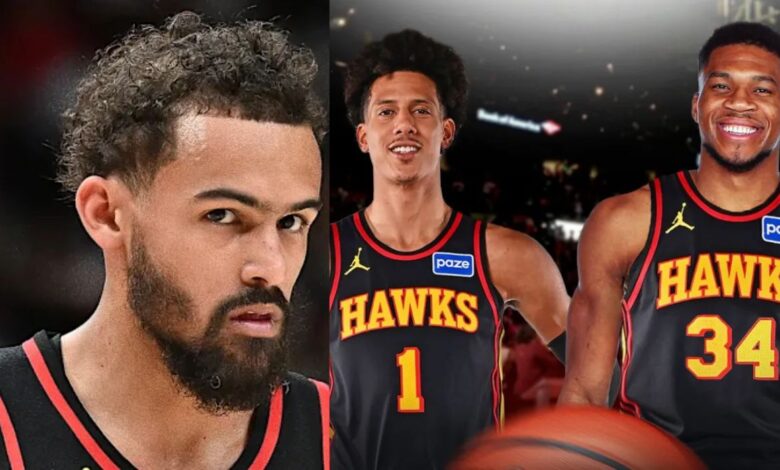
Trae Young has emerged as one of the most electrifying and prolific point guards in the NBA. Known for his deep three‑point range, elite ball‑handling, and incredible playmaking abilities, Young stands out among his peers. Yet beyond natural talent and NBA spotlight lies a story deeply rooted in discipline, unrelenting work ethic, and guidance from a key figure in his life — his father, Rayford Young. This article explores in depth Trae Young’s training routine, his work habits, and the profound influence Rayford Young has had on his development as an athlete and as a person.
Quick Information Table: Trae Young & Training Facts
| Category | Details |
|---|---|
| Full Name | Rayford Trae Young |
| Birthdate | September 19, 1998 |
| NBA Draft | 2018 (Pick #5 overall) |
| NBA Team | Atlanta Hawks |
| Position | Point Guard |
| Height | 6’1″ (185 cm) |
| Weight | 180 lbs (82 kg) |
| Primary Skill | Playmaking & Long‑range Shooting |
| Training Frequency | 6–7 Days per Week |
| Average Training Hours (Weekly) | 20–25 hours |
| Mentorship | Rayford Young (father) |
| Known Strengths | Shooting, Handles, Court Vision |
| Off‑Season Focus Areas | Strength, Conditioning, Shot Mechanics |
| Pre‑Game Routine | Visualization & Ball Control Drills |
1. The Early Years: Foundations of a Work Ethic
Trae Young’s passion for basketball was evident from a young age. Growing up in Lubbock, Texas, he was surrounded by sports, but it was his father, Rayford Young, who recognized his potential early on. What set Trae apart wasn’t just his natural affinity for scoring — it was his willingness to dedicate hours to repetitive practice. Rayford, himself a disciplined and organized mentor, instilled routines that emphasized consistency over flashy performance, laying the groundwork for a lifelong commitment to improvement.
2. The Importance of a Structured Routine
Day‑to‑day organization is often overlooked in athlete development, but for Trae Young, it became a cornerstone. Every week, he followed a structured rhythm: dedicated shooting sessions, strength training, film study, and recovery time. Rayford helped design this structure long before Trae became a college standout or NBA star. The emphasis was clear — routine builds habits, Trae Young create excellence.
3. Shooting Drills: Volume, Repetition, and Precision
One of Trae’s most recognizable strengths is his shooting — especially from deep range. But this didn’t happen by chance. His training drills focus on high volume repetition, with thousands of shots taken weekly. Rayford encouraged Trae to not just shoot, but to analyze every attempt: foot placement, follow‑through, release, and arc. This detail‑oriented approach means that even when fatigued, Young’s mechanics remain consistent — a key reason his long‑range shooting remains elite.
4. Ball‑Handling Mastery: Beyond the Basics
Elite shooters often struggle under pressure, but Trae’s ball handling keeps him in control even when double‑teamed or trapped. Rayford’s mentoring emphasized challenging drills that imitate real game pressure: weaving through cones, two‑ball dribbling, and maintaining control while fatigued. These drills aren’t glamorous, but they train efficiency under stress, which pays off in clutch moments.
5. Off‑Season Conditioning: Building a Stronger Trae
Basketball is not just skill play — it’s a physically demanding sport that requires strength, endurance, and resilience. Trae’s off‑season conditioning is intense: weight training, plyometrics, agility drills, and cardiovascular programs designed to enhance performance and reduce injury risk. Rayford’s philosophy was never to skip fundamentals: “You can’t improve what your body can’t handle,” he often reminded Trae.
6. Film Study: Intelligence Meets Instinct
Physical training is crucial, but mental preparation is equally important. Trae young dedicates hours to film analysis — studying defenses, recognizing patterns, and learning from mistakes. Rayford introduced this habit early, teaching Trae that the smartest players are those who prepare mentally. This film study translates to better split‑second decisions on the court.
7. Recovery and Injury Prevention
Elite training sessions are demanding, but without proper recovery, progress stagnates. Trae’s weekly routine includes active recovery: stretching, yoga, massage therapy, and sleep optimization. Rayford has consistently stressed the importance of rest — not as a luxury, but as a strategic component of athletic performance.
8. Mental Toughness: The Unseen Edge
Perhaps the most intangible part of Trae Young’s training is mental toughness. On any given night, he faces tough defenders, loud crowds, and high expectations. Still, he displays resilience and confidence. This mental strength is a combination of experience and encouragement from Rayford, who taught that mistakes are tools for learning and pressure is an opportunity, not a threat.
9. Balancing Individual and Team Training
Trae’s training is not isolated to personal skills; it also includes team dynamics. Understanding how to elevate teammates, set effective screens, and run complex offensive sets are part of his routine. Through drills and scrimmages, Rayford emphasized that great players serve their teams, not just themselves. This mindset transition was a key to Young’s leadership growth.
10. Adjusting to the Professional Game
Transitioning from college to the NBA requires adaptation. The pace is faster, defenders are smarter, and physicality is amplified. Trae’s training adjusted accordingly: shorter recovery windows, advanced strength work, and targeted skill enhancements. Rayford remained a guiding force, helping him tailor drills to fit NBA demands without losing the core elements of his style.
11. Mindful Practice: Quality Over Quantity
One of the biggest misconceptions about athlete training is that more is always better. Trae’s development proves otherwise. Rayford taught him to always evaluate the quality of practice — focused, intent‑driven sessions outperform aimless hours in the gym. This principle helped Trae avoid burnout and maximize every training minute.
12. Competitive Simulations: Training Like the Actual Game
Game simulations are vital in Trae’s routine. These sessions mimic real NBA defensive schemes and simulate crowd noise, fatigue, and pressure situations. Rayford helped organize these simulations with trainers and teammates to expose Trae to variables that sharpen decision‑making and adaptability — directly improving in‑game performance.
13. The Evolving Role of Mentorship
Rayford Young’s role has changed over time. Initially hands‑on in training logistics and daily routines, his support evolved into motivational and strategic mentoring. As Trae matured, Rayford shifted toward helping refine goals, maintain perspective, and foster leadership qualities. This evolution reflects both Trae’s growth and Rayford’s deep understanding of how mentorship should adapt along with the athlete.
Final Thoughts
Trae Young’s rise to NBA prominence is not just a story of natural talent — it is a testament to disciplined training, detailed routines, and consistent personal growth. At the heart of this journey is the influence of Rayford Young, a mentor who helped shape not only Trae’s skills but also his mindset. Through structured routines, relentless work ethic, and mindful practice, Trae has built a foundation that supports elite performance on basketball’s biggest stage. For aspiring athletes, coaches, and fans alike, his story serves as a powerful reminder: true excellence is earned through thoughtful preparation and unwavering dedication.
Frequently Asked Questions (FAQs)
1. What does Trae Young’s weekly training schedule look like?
Trae Young trains nearly every day during the season and even more intensively in the off‑season. His schedule typically includes morning weight training or conditioning, mid‑day skill work such as shooting and ball handling, and afternoon recovery routines. On game days, he reduces volume but focuses on pre‑game warm‑ups, film study, and mental preparation. Overall, he invests 20–25 hours weekly between conditioning, drilling, recovery, and strategic preparations.
2. How has Rayford Young influenced Trae’s training approach?
Rayford Young was instrumental in creating Trae’s early development routines. His influence centered on consistency, structured repetition, and disciplined mental preparation. Rather than focusing solely on flashy skills, Rayford emphasized fundamentals, resilience, and mindfulness during training — shaping Trae’s habits both on and off the court. This mentorship helped Trae build a balanced approach that values quality training over short‑term goals.
3. What specific drills does Trae Young do to improve his shooting?
Trae incorporates a variety of shooting drills that emphasize volume and precision. These include catch‑and‑shoot sequences, off‑dribble pull‑ups, transition shooting, and deep range three‑point attempts. Each drill focuses on consistency: maintaining proper footwork, release angle, and arc. Additionally, Trae tracks shot percentages during practice to ensure measurable improvement rather than shooting in an unfocused manner.
4. How does Trae Young prevent injuries with his training?
Injury prevention is a key part of Trae’s routine. He includes strength training that targets core stability, leg strength, and shoulder durability — crucial for a high‑usage guard. Recovery protocols such as stretching, massage, adequate sleep, and active rest days are integral. Additionally, Trae works with physical therapists to address minor issues before they escalate, keeping him healthier throughout long seasons.
5. Why is mental preparation important in Trae Young’s routine?
Mental preparation allows Trae to stay focused, confident, and adaptive during games. He studies film to understand opponents, plans responses to defensive schemes, and uses visualization to rehearse scenarios before games. Rayford encouraged this early, emphasizing that success depends on both mind and body. Mental readiness enhances decision‑making under pressure, helping Trae remain effective even when games become intense.